Monday, August 21, 2006

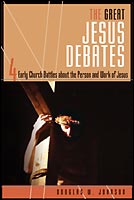
The Great Jesus Debates


From chapter 6 of The Great Jesus Debates – 4 Early Church battles about the Person and work of Jesus, by Douglas Johnson. Published by Concordia 2005

Probably the most common and ‘popular’ accusation against the Early Church fathers is that they obscure the Gospel of Jesus by subjecting it to needless and even distorting intellectual formulas and complex creedal decrees. Those who make this accusation are typically, but not necessarily, individuals who are adverse to any and all theological statements of belief. They probably align themselves with a congregation, denomination, or even a non-Christian religion because they feel welcome, the music is good, the morality seems right, there are good programs, or the sermons are uplifting. Perhaps these individuals are even attracted to a group because its people rang their doorbell and invited them to church. For them, belief in some higher power and the dedication to living a good life are enough. Theological niceties are resented and should be avoided. Other, more existentially important matters, are at hand. In fact, much of the contemporary appeal of some forms of Judaism and Islam arises because they have a simple belief in one God, accompanied by an appropriately simple moral code. Thus some churches are tempted to believe that the less theology in which we indulge, the better we can get along with our neighbours in this multicultural world.

Rest assured, however, that the response of the Church fathers to this attitude would be fairly unanimous. On one hand, they would agree that idle speculation into the nature of God and his interaction with the human family can and does lead to disaster. In fact, much of the work of the early Christian thinkers and the decrees of the Early Church councils was accomplished precisely to limit such speculation. On the other hand, the early Church fathers would just as strongly insist that beliefs do matter, that our mind is an important, perhaps central, part of our being and what we believe has a profound influence on our relationships with God and our fellow human beings. Christianity is more than feelings and good works. What we think is important too.

Further, the people who decry theological statements really do have a theology in their minds, no matter how unreflective it may be. Therefore, we should think through our doctrines and straighten them out from the outset or they can lead us to precisely those entangling speculations we mean to avoid. A refusal to consider a clear statement of one’s own beliefs can leave a person open to all kinds of strange and harmful ideas and practices in the future.

For the Early Church fathers, ‘getting it right’ involved the grace of God in Jesus Christ. This was their touchstone. Whatever threatened to deny grace was rejected. This was the major source of those theological formulations that to some seem so burdensome today.

Wednesday, August 16, 2006

Shrewd Sanctity

From chapter 10 of Shrewd Sanctity – the story of Kathleen Hall 1896-1970, missionary nurse in China, by Rae McGregor, published by Polygraphia 2006

After giving instructions to her [Chinese] nurses about what should be done at the clinic while she was away she began the long walk to the railway line where she could catch a train to Beijing. It was a relief that there were no obstructions [from the Japanese] and she arrived in Beijing full of enthusiasm for the future of the mission at Songjiazhuang.

She was in for a shock.

The Japanese had made a formal complaint about her to the British Embassy and were demanding that she be sent out of China. After all her efforts to keep her work quiet a well-meaning Chinese journalist had heard about her activities and written a glowing article about her in a Chinese newspaper. Of course the Japanese intelligence read all the newspapers and immediately became suspicious of her. She was ordered out.
There was a message for her from Mr Britland saying she was to go immediately to Hong Kong and get in touch with Bishop Hall. Her life was in danger and on hearing of her arrival in Beijing the mission had made out a travel pass so she could leave immediately.

She didn’t want to go and, during the night, she considered over and over again ways in which she could slip out into the Western Hills and return to the JinChaJi area. She knew the terrain, all the paths that others didn’t know. It would be easy for her to make her way out of Beijing and get back into the village in the hills. But as the night wore on she realised that now she was a big danger to others. The Japanese would be watching her. Anyone she contacted would immediately be suspect and in mortal danger. Even if she did get through safely, she wouldn’t be able to take any supplies with her and it would only be a matter of time before she was hunted down.

After her sleepless night she dressed early, aware that there was nothing she could do but go. Through her secret contacts in Beijing she sent messages back to her nurses at Songjiazhuang. It was a miserable thought that she wouldn’t be able to continue her work, but worse that she couldn’t say goodbye.

Tuesday, August 15, 2006

Prayer – does it make any difference?

From chapter 12 of Prayer – does it make any difference? by Philip Yancey, published by Hodder & Stoughton 2006.

Daniel Yankelovich, an astute observer of social trends, points to a cultural shift that occurred in the West in the 1970s. Before then, society valued self-denial or ‘deferred gratification.’ Spouses sacrificed, even if it meant holding two jobs and accepting transfers to other cities, in pursuit of long-term goals. Parents trapped in an unsatisfying marriage stayed together for the sake of the children. In the 1970s the rules changed: the self-denial ethic morphed into the self-fulfilment ethic. We listen to our emotional needs and want them fulfilled now, without sacrifice, without waiting. We buy whatever we want on credit and jettison anything that proves complicated or irksome (like a troublesome marriage, for instance).

Under the new rules prayer loses out. It requires discipline, involves persevering through periods of darkness and dryness, and its results are difficult to measure. Rarely does it satisfy emotional cravings right away.

Indeed, the New Testament presents prayer as a weapon in a prolonged struggle. Jesus’ parable on prayer show a widow pestering a judge and a man pounding on his neighbour’s door. After painting a picture of the Christian as a soldier fitted out with the ‘full armour of God,’ Paul gives four direct commands to pray. Elsewhere, Paul urges his protégé Timothy to endure hardship like a soldier, to toil like a farmer, to compete like an athlete.

I have neither farmed nor served in the military but for thirty years I have been a runner, often entering charity races. I remember well how it all started. I met a young man named Peter Jenkins at a writers’ conference as he was working on the book A Walk Across America, which later became a national bestseller. As he recounted some of his adventures on a long walk across the country, he said, ‘I get tired of these reporters flying down from New York, renting a car, then driving out to meet me. They hit the electric window button of their air-conditioned car, lean out, and ask, ‘So, Peter, what’s it like to walk across America?’ I’d like a reporter to walk with me for a while!’ Without thinking, I volunteered. [Now,] my body has become so accustomed to [exercise] that, if I have to skip a few days because of injury or illness, I feel edgy and restless.

As with physical exercise, much of the benefit of prayer comes as a result of consistency, the simple act of showing up. The writer Nancy Mairs says she attends church in the same spirit in which a writer goes to her desk every morning, so that if an idea comes along she’ll be there to receive it. I approach prayer the same way. Many days I would be hard-pressed to describe a direct benefit. I keep on, though whether it feels as if I am profiting or not. I show up in the hope of getting to know God better, and perhaps hearing from God in ways accessible only through quiet and solitude.

Friday, August 11, 2006

Growing Great Boys

From chapter 4 of Growing Great Boys –100s of practical strategies for bringing out the best in your son, by Ian Grant. Published by Random House 2006

I suggest to mothers that your boys receive the clear message that you are a leader who is not easily threatened. So if your son calls you a silly old bag (or something worse), instead of trying to get back at him through guilt by telling him about all the things you’ve ever done for him, just walk away. Don’t try to engage or yell back; just withdraw your availability. Several hours later, when he comes to you asking, ‘Hey Mum will you take me down to the shops, I need to get some stuff for school,’ respond by saying something like this, ‘I’m sorry….mothers do things like that – but ‘old bags’ don’t.’ Don’t, under any circumstances, take him. Always require some level of restitution and restoration for what he has done or said. Otherwise he will learn to use ‘phoney’ sorrys, which carry no level of regret or responsibility for the action.

A single mother told me that her eleven-year-old boy had called her a ‘b…b…’. She had attended a seminar and remembered the above illustration. So she responded with, ‘You will not use those words to me,’ and walked away. She thought about how she could withdraw her services from her son.

The next morning she didn’t provide his usual wake-up call, leaving him to take responsibility for his own morning routine. He got up in a panic, after sleeping in, as he had the responsibility of working the overhead projector at his school assembly that morning. He begged his mother to drive him to school, at which point she said, ‘Mothers do things like that, but I’m sorry b….b…s’ don’t.’

He begged, pleaded…and even promised to do the dishes for a year! It was such a good offer, she said that she nearly took it up – but instead she remained firm. He had to walk to school. However, being a smart woman, she rang the deputy principal and told him what had happened. The deputy principal followed up by calling the boy into his office and asking why he had failed to be there in time to operate the overhead projector.

The boy fabricated a terrific story: a car had taken out a power pole at the top of the street. Everyone was without electricity, and he had assisted the little old lady next door in her crisis…that had been why he was late. The deputy principal patiently listened, and then asked, ‘Your reason for being late wasn’t because you called your mother a disrespectful name, was it?’ The blood drained from the boy’s face!

The mother is now the proud possessor of a note on school letterhead congratulating her on using tough love and a useful parenting skill – that of withdrawing resources.

Thursday, August 10, 2006

Growing Hope daily readings

From the entry for the 22nd April, in Growing Hope daily readings, compiled by Neil Paynter, published by Wild Goose 2006.

To be a creature, one among many, is to come face to face with our limitations. We are not God, and God is not just an idealized version of us. God is other, and speaks to us in other voices. Our judgement of the world, sometimes expressed as if we had a monopoly on divine truth, is, in truth, that which holds us most to account. In Micah 6, the prophet calls the people as if to a court of law to listen to what God is saying, and this is what God the plaintiff says: ‘Rise, plead your case before the mountains, and let the hills hear you voice. Hear, you mountains, the controversy of the Lord, and you enduring foundations of the earth; for the Lord has a controversy with his people, and He will contend with Israel."

There can be no clearer indication anywhere in scripture that to be a creature in covenant is to be required to be in right relationship not only with our own human kind, but with the whole creation. Justice is also eco-justice. And how, then, will the mountains judge us? Will the enduring foundations of the earth find in our favour?

And we are discovering the earth is making its own judgements…it may be no exaggeration to say that we are at a kairos, a defining moment in human history. In the midst of a hugely accelerated pace of change, we are confronting in equal measure unparalleled opportunities and unparalleled threats. Significant parts of the human population, particularly in the West, are healthier, wealthier and enjoy greater opportunities for self-realization than ever before. At the same time, the gap between rich and poor is growing, huge parts of humanity live on the margins of destitution, uprooted peoples number tens of millions and wars and pandemics devastate dozens of countries. Social and political institutions everywhere are changing and once powerful ideologies have lost their hold. The fabric and future of life itself is facing commodification and, on one hand, the wealth of consumer nations and, on the other, the poverty of energy and resource-poor countries, have caused an ecological holocaust which threatens the continuation of the planet.

In the last 25 years alone, the human species has destroyed one third of its non-renewable resources. Our actions have consequences: the destruction of rainforests leads to global warming, the pollution of lakes destroys localised eco-systems;….floods drown and bring diseases in their wake. How will the mountains judge us? I think we are beginning to hear the answer.

Monday, August 07, 2006

Church of the Isles - part 2

From chapter 5 of Church of the Isles – a prophetic strategy for renewal, by Ray Simpson. Published by Kevin Mayhew 2003.

‘See how these Christians love one another’ was a common saying in the first few centuries of the church. Since those times, those who wish to become members of the church have been required to accept a creed which states what they are to believe, but they have not been required to accept the Beatitudes (the beautiful attitudes commended by Jesus, Matthew 5: 1-12), which state how they are to relate. The emerging church puts the Beatitudes on a level with the creeds.

If the loving church is to replace the judgmental church, cells within the Body of Christ will have to learn new conditioned reflexes. Members of churches who visit Lindisfarne often ask, ‘How do we bring this about?’

They want to serve Jesus, but do not want to do this in churches that are dominated by committees, clerics and conventions. I advise them to exercise faith. That is, to act as if relationship is primary in every conversation, committee and circumstance.

One church encourages any member who had upset another to take them a love gift the following day.

Equality of regard has become an accept principle in our society. It was, for example, a building block of the 1998 Northern Ireland Good Friday Agreement. The emerging church has to be a community where this principle is practised.

At the heart of the doctrine of God is a communion of loving selves. In a book entitled ‘Trinity for Atheists’ Italian theologian Bruno Forte describes the Trinity as ‘a communion of flowing relationships.’ We can only find our true identity as persons by reflecting this communion. As Charles Williams observed: it is as important to learn how we live from each other as how we are to live for each other.

In St Aidan’s ancient kingdom of Northumbria there are still people, like him, who model church as friendship. When Rev Catherine Hooper, who had parishes in the Gateshead area, was killed in a car crash in 1999 a neighbour told the Daily Telegraph: ‘It took her [Hooper] ages to walk to church because she was stopped by so many people along the way who wanted to talk to her. Before she came here very few people came to church, but afterwards it was always packed, especially with young people.’

Friday, August 04, 2006

Joy Lasts

From pp 19-23 of Joy Lasts –on the spiritual in art, by Sister Wendy Beckett. Published by Getty Publications 2006

Two splendid paintings depict precisely this deeply spiritual theme of visions. A vision or ecstasy dares to reveal a soul in most intimate union with God: there could hardly be a more serious, more affecting image for anyone who also yearns to live in that sacred union. In ‘The Vision of Saint Bruno’ Mola depicted the founder of the Carthusians, an order of men who essentially live in solitude, meeting only in church. The saint’s habit – white, ample – extends over the ground, as if to symbolize for us the surrender of his heart. He glimmers in the dusk, an aging hermit lost in prayer. His face is half averted, but that tremendous lifted arm tells us that he sees. What he sees Mola does not venture to depict.

The one element I find off-putting is the cherubs’ heads bobbing like balloons above him, but they are perhaps more apt for their very ineptitude: it is impossible to depict in physical terms what has overthrown Bruno and irradiated his prone body. The very trees seem to bow to an unseen presence. And yet, while I see all the ingredients of ecstasy here, I miss the thing itself. What excites me most is that expanse of gleaming cloth, with its secrets and spaces. It speaks to me more profoundly than Bruno does.

Murillo’s ‘Vision of Saint Francis of Paola’ is a very different – and, for me, more successful – presentation of religious ecstasy. Murillo, of course, is a hit-and-miss artist. His misses, when he lapses into sentimentality – all those adorable little Baby Jesus and little Saint John pictures – are never more than charming. They are always this, at least, because Murillo is such a great technician: no artist has excelled him in the tactility of his textures. But when he succeeds, he strikes straight to the heart, and this work seems to me one of his great hits. He has almost wantonly foregone his chief strength, his ability to make us feel substances: in the supernal glow seeming to emanate from the word ‘Charitas,’ it is not easy to respond to the great swathes of coarse brown in which the saint is clad, and we can barely make out, in the distance, an enactment of one of the saint’s miracles.

All our attention is drawn with inescapable power to that pleading face, the profundity of the offering that Francis makes of himself to God. The five small angels (dear little creatures, like Murillo’s children) are insignificant. Francis does not see them; he is looking in adoration at his Lord. I find that I cannot regard this picture without tears. I do not actually cry, but my eyes sting. And this brings me a great step nearer to what I want to say about El Greco’s ‘Christ on the Cross.’

Wednesday, August 02, 2006

Church of the Isles

From chapter 6 of Church of the Isles – a prophetic strategy for renewal, by Ray Simpson, published by Kevin Mayhew, 2003.

The Orthodox throughout the world venerate the saints of the first millenium in every land and regard the church in Celtic lands in that period as the Orthodox Church. The glory of the Orthodox Church is its continuity, which its liturgies enshrine. It claims to be the only true church. However, it has little chance of becoming the ‘People’s Church’ in Western lands unless it faces up to at least two challenges.

The first challenge is that many Eastern Orthodox Churches have become so culture-friendly that they are little more than the religious arm of nationalism, failing to combat dreadful atrocities in some lands and deep animosities towards fellow Orthodox and non-Orthodox in other lands. On the day in 1917 that ushered in 70 years of Communist tyranny in Russia, the Holy Synod of the Russian Orthodox Church was in conclave. Its agenda? The colour of vestments. It missed the revolution.

The second challenge is to Orthodox Churches in the West: by placing themselves under the jurisdiction of a patriarch from the Eastern Church, how can they claim to be the indigenous Church in the West?

The Celtic Orthodox Church has tried to address this. It sees itself as the Orthodox Church in Celtic lands (mainly Britain and France) and believes that its style and liturgy should therefore be indigenous. For this reason, although its bishop is in the apostolic succession and has been consecrated by a Syrian Orthodox patriarch, it will not place itself under the jurisdiction of a patriarch from the East. In their liturgy, unlike Eastern Orthodoxy, they allow people to see through the screen to the inner sanctuary in order to emphasise that the church is open to all and is not just for a select few priests.

The heartbeat of the Celtic Orthodox Church is the monastery at St Dol, Brittany. Here six monks have lived holy lives for 20 years. In that time they have never purchased food; they rely for their food on what the people place in large baskets at each Sunday liturgy. These monks seek to build loving relationships with Catholics and others; and they reach out to young people, teaching them and accompanying their convoys of aid to stricken areas of Europe. Other aspects of this church, however, breathe the atmosphere of political machination.

A third challenge is that the Orthodox liturgy and church culture, which adherents claim to be original and essentially unalterable, does not, in fact, derive from the New Testament so much as from the time when the Roman Emperor Constantine made the Church the official religion of the Empire. God and the saints are cast in the imperial image. So when Orthodox Churches are founded in countries far removed form that empire in time and mentality, they are in fact alienating rather than saving institutions.

Did Orthodoxy stop doing theology creatively after the first seven Councils of the Church? Can it extricate itself from the imperial stream in which it was then swimming?

Monday, July 31, 2006

Paradoxy

From chapter 5 of Paradoxy – coming to grips with the contradictions of Jesus, by Tom Taylor. Published by Baker Books 2006

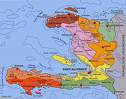
Haiti has been identified as the poorest country in the Western hemisphere. When parents died, their children were sent or sometimes voluntarily went to a relative or neighbour who agreed to take them in. However, most adults could not afford to take on more mouths to feed, minds to educate, or bodies to clothe. The result was that these children entered homes where they received only the bare essentials to survive. They were expected to work for the family, who kept them at emotional and physical arm’s length.

The Haitian Creole term for such children was ‘house children.’ Their status was little more than indentured household slaves. Haitian adults housing such children explained to me the unwritten rule that these children were not to be touched or spoken to affectionately. They typically lived behind the house, either in a shed or sometimes under a simple lean-to. They took their meals by themselves and otherwise lived a life of doing chores on demand. I had heard about many instances of abuse of these house children.

As I sat at a table talking to the father of the family where the little girl with the blank eyes lived, I said ‘hi’ to her and asked in Creole what her name was. She stared at the floor, a wary expression of fearfulness on her face. To my distress, the father sternly demanded that she respond. She shuffled over to me and extended a limp hand for me to shake, never looking up from the floor.

When I questioned the family about it later, they argued the rationale for such treatment of house children. Families with such kids cannot afford to raise them as their own and certainly cannot afford to send them to elementary school, which at that time would have cost about twelve dollars per month and would have provided them with a new, clean school uniform and a daily meal. The parents of house children cannot promise them much of a future, so why get their hopes up? They should be grateful, so the argument went, to have a place to stay and meals to sustain them.

I countered their arguments, decrying as persuasively as I could their innocent and young status, as well as the lack of compassion in the house child practice. But it was an uphill battle, always met with the same rejoinder: as a wealthy American, I could not possibly understand.

As I flew back to the United States after living in Haiti for several months, I stared out the window. Seven hundred miles. Just seven hundred miles off the coast of one of the world’s wealthiest countries. That’s how far Haiti is from Miami. If the Haitians living in their poverty only knew. Yet after living and working among Haitian people, watching their hardships, rubbing shoulders with them in their burdensome poverty, and seeing their desperation now juxtaposed to the lavish wealth of even the average American on the plane, I was threatened by fatalistic hopelessness for the Haitians’ circumstances. I could do little more than weep for them. And that I did.

Thursday, July 27, 2006

The Complete Worship Service

From chapter 5 of The Complete Worship Service - creating a taste of heaven on earth, by Kevin J Navarro, published by Baker Books 2005.

[In preaching] I do not think we have to choose between being culturally relevant or textually accurate. Why do we need to be binary when it comes to this issue? Why can’t we be faithful to the text and relevant to the issues our people are struggling with? This is the issue John R W Stott addressed when he spoke about living between two worlds. We must exegete the text, but we must also exegete our culture. As we strive to preach a message series, I believe we are forced to think about this issue. And I believe that as we do this with excellence, people will talk and say, ‘You’ve gotta be there.’ They will say, ‘The music is great, the people are friendly, and the teaching is really a blessing.’ God will begin to use us to reach out to our communities that so desperately need to hear the Good News of Jesus Christ and the kingdom of God.

I encourage you to have a solid theological orientation when it comes to worship service planning, but I also encourage you to have an entrepreneurial spirit. Try new and innovative initiatives that will give your people incentive to invite their friends to your church. Certainly focus on the quality, but also ponder the human needs you are addressing and then begin to tell your community about your church. We need to aggressively think of ways to connect without community. We need to pray that our church would be like a magnet, drawing all who are looking for life in Christ. And then we need to pray that when they actually arrive, this is in fact what they will find.

The Lord is ready to bring the city to our doorstep, but are we ready? As we would clean up our house before inviting someone over for dinner, we need to clean up the mediocrity we have settled for in the local church. Garden-variety worship is unacceptable. It is not what God wants from us. And it certainly is not what spiritually desperate people are longing for. People are longing for a taste of heaven. Go out of the way to have a hospitable spirit toward people looking for Jesus. When they encounter this kind of hospitable community, they will in turn say, "You’ve gotta be at this church.’ This is my prayer for your church and for mine. May God grant us life-giving churches!

Wednesday, July 26, 2006

The New Puritans

From chapter 2 of The New Puritans – the rise of fundamentalism in the Anglican Church, by Muriel Porter, published by Melbourne University Press 2006

In hindsight, the compromises of the 1950s have been debilitating for the national Church. Would it have been wiser to create a national Church that did not include Sydney, if it was not prepared to accept the will of the majority? I suspect it would have had little effect on Sydney’s ongoing life and its relationship with the rest of the Church if it had remained separate. Certainly in recent years it has substantially gone its own way regardless of the rest of the Church, and been quick to threaten schism will result if national decisions are taken that it does not like. The threats are never specific, and do not necessarily imply that Sydney would formally leave the national Church. Rather, they are suggestions that a different style of federation would be required if women became bishops, for instance.

An Australian Church without Sydney would, however have released enormous energy for growth and renewal in the other dioceses, freed from Sydney’s relentless negative influence. I acknowledge that this is a minority view. Most Anglicans still fondly hope that one day, real national unity of purpose will be achieved with Sydney coming onboard without its current agenda. But as a member of General Synod since 1987 and of its Standing Committee since 1989, I know this is highly unlikely. I also know only too well the huge burden the Church carries in trying to cope with the continual, determined and well-resourced opposition that emanates from Sydney. Sometimes families reluctantly have to agree to take separate paths for the good of everyone concerned. Perhaps this is what should have happened in 1955, although possibly the ‘fathers of the constitution’ believed that if Sydney were adequately protected from any unwelcome intrusions into its territory, it would become more relaxed and co-operative in its relationships with the other dioceses. Sadly, this had not happened.

Alternatively, the constitution should not have two avenues of protection for minorities: either the high bar of a two-thirds vote on key decisions or the discretion for dioceses not to adopt specific canons, but not both. It is manifestly unfair that a minority can frustrate the will of the majority on an issue such as women priests for bishops, preventing other dioceses from introducing the measure, even though there is no way it can be adopted in their own dioceses without their approval in any case. These protections mean that diocesanism works in one direction only: Sydney Diocese controls what it will allow within its jurisdiction, but effectively also controls what other dioceses can and cannot do. Some kind of separation might yet need to happen. Given Sydney’s much greater comparative strength now, any such division at this point would be far more damaging for everyone than it would have been in 1955.

Friday, July 21, 2006

Five Years On

From chapter 14 of Five Years On – continuing faith journeys of those who left the church, by Alan Jamieson, Jenny McIntosh, and Adrienne Thompson. Published by Portland Research Trust 2006.

In the research we have been looking for common threads in order to generalise about what we presumed to describe as ‘typical’ of the categories we discerned among church leavers. At the same time we are extremely aware that each person is unique, that each journey is different, and that no one fits neatly into a box. We have talked of ‘stages’ of church leavers but it might be truer to talk of ‘zones.’ A zone is a space not defined by closed borders. For example, in the terms of this study, a person may be moving toward becoming an Explorer but still exhibit many of the traits of an Exile. Thankfully, there’s no quick quiz to help you neatly classify another person – or yourself.

These categories can’t be forced onto people, but we have become very certain of their usefulness. This was demonstrated at the first training weekend held for people interested in facilitating groups like Spirited Exchanges. Many of those who came had left church, others struggled at the fringe. They were introduced to the categories of the Displaced, the Exiles, the Explorers and the Wayfinders not as a grid on which they might exactly plot their position but more as a pictorial map by which they might identify the zones through which they travelled.

Nearly all of the participants could track the pattern of their own journey on the ‘map;’ or could see how it would help them to understand another’s story. As the group discussed what it might feel like to be in each zone and what images might symbolise that particular space there was clear agreement. People were not so much learning something new as recognising what they intuitively knew already.

So people nodded when they heard others describing how it feels to be Displaced: isolated, powerless, angry, betrayed and misunderstood were the adjectives used. In the discussion about the Exile space the group- came up with some powerful images: ‘like being at a major intersection…like having a suitcase burst and scatter its contents all over the place….like looking at your own grave.’ Many of the group had experienced this state and could identify with the feelings evoked by these pictures. By contrast, the sense of new life burgeoning, the beginnings of hopefulness and a restored energy to do not merely to talk: these were the elements that characterised the experience of those who described the Explorer zone. Once again, the majority of the group could recognise common ground.

Generalisations about a group can thus become a gift to the individual. Instead of locking a person into a stereotype, they can become a way of validating a person’s story, and furthering self understanding.

Tuesday, July 18, 2006

Finding God in the Fast Lane

From chapter 3 of Finding God in the Fast Lane – how to live in God’s presence in the midst of the maelstrom, by Joyce Huggett. Originally published 1993; this edition by Kevin Mayhew 2004.

[The Jesus Prayer] is particularly powerful because it can be prayed at any time, no matter what we are doing. A friend of mine, a widower, taught me this when I visited him on one occasion. When I asked him how he was, a cloud passed over his face as he admitted that he was in turmoil because he had an important choice to make by the next morning. But then his eyes twinkled as he showed me a bowl of gooseberries and a panful of peas: I’ve had a wonderful afternoon,’ he went on. ‘First I topped and tailed the gooseberries and then I shelled the peas and all the while I was praying the Jesus Prayer: Lord Jesus Christ, Son of God, have mercy on me and guide me.’

Kallistos Ware, in The Power of the Name, points out that the joy of the Jesus Prayer is that it may be said, once or many times, in the scattered moments that otherwise would be wasted – for example, when we are engaged in a semi-automatic task such as dressing, washing up, mending, gardening, walking, waiting in a queue or sitting in a traffic jam. We can pray this prayer, too, in a moment of quiet before a potentially painful or difficult meeting or interview, or when we find ourselves unable to sleep, or while we are waiting for full consciousness to dawn when we wake up. The prayer’s radical simplicity is especially meaningful and helpful when we are tense or anxious.

The Jesus Prayer also makes a marvellous springboard for the prayer of gratitude. I discovered this one day as I was preparing vegetables for supper. For two days life had left me tempest-tossed and battered, but as I lifted the situation to God, a shaft of light seemed to pierce the darkness. Suddenly I saw both the reason for the turmoil and a way out of it. Quite spontaneously, I found myself cutting courgettes and repeating: ‘Lord Jesus Christ, Son of God, thank you for having mercy.’

Monday, July 17, 2006

God’s Life in Trinity

From Trinity and Gender Reconsidered, by Sarah Coakley – chapter 11 of God’s Life in Trinity, [a ‘conversation’ with the work of Jurgen Moltmann] edited by Miroslav Volf and Michael Welker, published by Fortress 2006.
[Other contributors include: Harvey Cox, Jr, Douglas Meeks, Daniel Migliore, Gerald O’Collins, John Polkinghorne, Nicholas Wolterstorff.]

[Moltmann] never explicitly raises this question: What ‘difference’ does it make to the issue of gender that God is ‘three’? Also, what difference does it make to gender that in the Incarnation the Son crosses (and we might say transgresses) the ultimate ontological binary ‘difference’ – that between God and humanity, Creator and created?

Although I admittedly bring these current ‘interests’ [secular gender theory] to the theological discussion, I also wish to appeal to Christian spiritual practices that can claim to aid a radical dispossession to the Spirit’s power to reformulate and redirect our worldly thinking about gender. Precisely by the regular discipline of silently listening to the Spirit in prayer and of meditating on the Bible , precisely by the invocation of the Spirit’s epicleptic power over bread and wine, precisely by the handing over – in these pneumatological interactions – of my human desire to control, order and categorize my world, I am already inviting what is ‘third’ in God to break the hold of my binary thinking.

The Spirit, then, is from this perspective no longer seen – as in so much Western medieval iconography of the Trinity – as the waiting ‘feminine’ adjunct to an all-male negotiation of salvation; but the Spirit becomes the very source and power of a transformed understanding of gender, one rendered labile to the workings of divine desire in us. No longer do I start with the binary building blocks of ‘male’ and ‘female,’ but instead with a primary submission in prayer to a form of love that necessarily transcends, and even ruptures, my normal forms of gender understanding. To speak thus, and admittedly boldly, is no mere subjective appeal to ‘experience’ (for if such a repeated activity of prayer can be called an ‘experience,’ it is a highly paradoxical one, a sort of blanking of noetic certainties.)

It is, however, tied to a very close rendition of the textual authority of Paul in Romans 8 , where he speaks simultaneously of prayer as divinely done in us by the spirit ‘with sighs too deep for words,’ and yet as also forging us – through this painful process of nescience and loss of control - into the very likeness of Christ, into ‘the glorious liberty of the children of God.’ Such too, as I read Paul (rather differently on this point from Moltmann), is the significance of the celebrated saying ‘neither male and female’ in Gal. 3:28; it is not, as I see it, that maleness and femaleness are necessarily obliterated by what Paul envisages, either now or eschatologically, but rather that they are rendered spiritually insignificant, or (as we might now put it) nonbinary in their possibilities, in the face of the Spirit’s work and our transformations into Christ’s body.

Epicleptic: Epicletic prayer acknowledges that God is the primary agent that makes worship effective and nourishing. Preaching is ultimately effective because the Holy Spirit uses it to comfort, challenge, or convict us. The Lord’s Supper is not made powerful by how hard we think about Jesus, but by the how the Spirit works through it to nourish our faith. Epicletic prayer places us in a posture of humility, longing, and expectation, and frees us from the burden of thinking that the power of worship is all up to us. From the Reformed Worship site.

Friday, July 14, 2006

The Intimate Merton


From Part IV (The Pivotal Years) of The Intimate Merton – Merton’s life from his journals, by Thomas Merton. Published by Lion Publishing 2006.

March 10, 1963.
I thought today, at adoration of the Blessed Sacrament, what a blessing it was I did not go in 1956 to be analysed by Gregory Zilboorg! What a tragedy and mess that would have been - and I must give Z. the credit for having sense it himself in his own way. It would have been utterly impossible and absurd. I think in great measure his judgment was that I could not be fitted into his kind of theatre. There was no conceivable part for me to play in his life; on the contrary! And certainly it is true that the whole thing would have been unimaginably absurd. He had quite enough intelligence (more than enough, he was no fool at all!) to see that it would be a very poor production for him, for the Abbot (who was most willing), and for me. I am afraid that I was willing at the time, to go, which shows what a fool I was.

In any case, all manner of better things were reserved for me. But I have not understood them.

<><><>

In a Zen koan someone said that an enlightened man is not one who seeks Buddha or finds Buddha, but just an ordinary man who has nothing left to do. Yet mere stopping is not to arrive. To stop is to stay a million miles from it, to do nothing is to miss it by the whole width of the universe. Yet how close it is, how simple it would be to have nothing more to do – if I had only done it. Meanwhile, I am more content than I have ever been here with this unripeness. I know that one day it will ripen, and one will see there had been nothing there at all except an ordinary person with nothing to do in the first place.

<><><>

The evening light. Purple coves and holes of shadow in the breasts of hills and the white gable of Newton’s house smiling so peacefully amid the trees in the middle of the valley. This is the peace and luminosity William Blake loved. Today after dinner, a hawk, circling the novitiate and the church steeple, designed a free flight unutterably more pure than skating or music. How he flung himself down from on high and swooped up to touch lightly on the pinnacle of the steeple and sit there, then fell off to cut lovely curves all around the cedars, then off like an arrow into the south.