“Oh yes, I’ve had it with the prophets who preach the lies they dream up, spreading them all over the country, ruining the lives of my people with their cheap and reckless lies. “I never sent these prophets, never authorized a single one of them. They do nothing for this people— nothing”! God's Decree.
“And anyone, including prophets and priests, who asks, ‘What’s God got to say about all this, what’s troubling him?’ tell him, ‘You, you’re the trouble, and I’m getting rid of you.’ ” God's Decree.
“And if anyone, including prophets and priests, goes around saying glibly ‘God's Message! God's Message!’ I’ll punish him and his family.
“Instead of claiming to know what God says, ask questions of one another, such as ‘How do we understand God in this?’ But don’t go around pretending to know it all, saying ‘God told me this … God told me that ’ I don’t want to hear it anymore. Only the person I authorize speaks for me. Otherwise, my Message gets twisted, the Message of the living God -of-the-Angel-Armies.
From The Message: The Bible in Contemporary Language (p. 1053). NavPress, by Eugene Peterson. Jeremiah 23: 35-6
Showing posts with label prophets. Show all posts
Showing posts with label prophets. Show all posts
Saturday, January 02, 2016


Wednesday, October 03, 2012
False Prophets
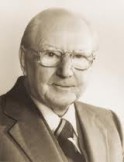 Jeremiah 23:16 carries the meaning that the false prophets, "Gave out the thoughts of their own heart as divine revelation, promising peace and prosperity to all stiff-necked sinners." Were such men popular? Indeed, they were popular among the vast wicked majority of the people. "Here we have the principal earmark of false teaching. False prophets, or teachers, always speak words that quiet the conscience, promise all kinds of good things, and violate with impunity the laws of morality." In our day, the false teachers know nothing except the grace, love, mercy, and forgiveness of God and absolutely nothing about obedience or holiness. Their doctrine is "Smile, something good is going to happen to you" or, "I'm OK, you're OK!"
Burton Coffman lived to be a 101. At his 100th birthday celebration, he was reported to be 'still his normal, booming self,' and, though a chair was put on the podium for him to preach from, he insisted on standing...
Thursday, August 09, 2012
Chesterton and Thankfulness
Living among men who never dreamed of giving thanks for the portents of existence, [Chesterton] realised that the visions of a supreme sanity may appear close to madness.
"I am the first," says a strange figure in a very youthful story, [A Crazy Tale, published in the Quarto - Slade School Magazine] "that ever saw the world. Prophets and sages there have been, out of whose great hearts came schools and churches. But I am the first that ever saw a dandelion as it is."
'Wind and dark rain swept round, swathing in a cloud the place of that awful proclamation...."I tell you religion is in its infancy; dervish and anchorite, Crusader and Ironside, were not fanatical enough or frantic enough, in their adoration...some day a creature [will] be produced, a new animal with eyes to see and ears to hear; with an intellect capable of performing a new function never before conceived truly; thanking God for his creation."'
Now let us turn from the boy whose head was whirling with the sheer excitement of existence to the man writing of the great St Thomas [Aquinas]:
"He did, with a most solid and colossal conviction, believe in Life; and in something like what Stevenson called the great theorem of the liveableness of life...
"There really was a new reason for regarding the sense, and the sensations of the body, and the experiences of the common man, with a reverence at which the great Aristotle would have stared, and no man in the ancient world could have begun to understand...The Body was no longer what it was when Plato and Porphyry and the old mystics had left it for dead. It had hung upon a gibbet. It had risen from a tomb...Plato might despise the flesh but God had not despised it...
"There is a general tone and temper of Aquinas which is as difficult to avoid as daylight in a great house of windows. It is that positive position of his mind, which is filled and soaked as with sunshine with the warmth of the wonder of created things. There is a certain private audacity in his communion, by which men add to their private names the tremendous titles of the Trinity and the Redemption; so that some nun may be called, 'of the Holy Ghost'; or a man bear such a burden as the title of St John of the Cross. In this sense, the man we are studying may specially be called St Thomas of the Creator...And perhaps no man ever came so near to calling the Creator by His own name, which can only be written I Am."
Page 10/11 of Return to Chesterton, by Maisie Ward.
"I am the first," says a strange figure in a very youthful story, [A Crazy Tale, published in the Quarto - Slade School Magazine] "that ever saw the world. Prophets and sages there have been, out of whose great hearts came schools and churches. But I am the first that ever saw a dandelion as it is."
'Wind and dark rain swept round, swathing in a cloud the place of that awful proclamation...."I tell you religion is in its infancy; dervish and anchorite, Crusader and Ironside, were not fanatical enough or frantic enough, in their adoration...some day a creature [will] be produced, a new animal with eyes to see and ears to hear; with an intellect capable of performing a new function never before conceived truly; thanking God for his creation."'
Now let us turn from the boy whose head was whirling with the sheer excitement of existence to the man writing of the great St Thomas [Aquinas]:
"He did, with a most solid and colossal conviction, believe in Life; and in something like what Stevenson called the great theorem of the liveableness of life...
"There really was a new reason for regarding the sense, and the sensations of the body, and the experiences of the common man, with a reverence at which the great Aristotle would have stared, and no man in the ancient world could have begun to understand...The Body was no longer what it was when Plato and Porphyry and the old mystics had left it for dead. It had hung upon a gibbet. It had risen from a tomb...Plato might despise the flesh but God had not despised it...
"There is a general tone and temper of Aquinas which is as difficult to avoid as daylight in a great house of windows. It is that positive position of his mind, which is filled and soaked as with sunshine with the warmth of the wonder of created things. There is a certain private audacity in his communion, by which men add to their private names the tremendous titles of the Trinity and the Redemption; so that some nun may be called, 'of the Holy Ghost'; or a man bear such a burden as the title of St John of the Cross. In this sense, the man we are studying may specially be called St Thomas of the Creator...And perhaps no man ever came so near to calling the Creator by His own name, which can only be written I Am."
Page 10/11 of Return to Chesterton, by Maisie Ward.
Saturday, April 14, 2012
Denying and affirming
Do I deny the resurrection? Okay, this is time to fess up. Yes. I do. Of course I do. Everyone who knows me knows I deny the resurrection. And I do deny the resurrection every time I do not serve my neighbour, every time I walk away from people who are poor. I deny the resurrection every time I participate in an unjust system. And I affirm the resurrection every now and again when I stand up for those who are on their knees. I affirm the resurrection when I cry out for those people who have had their tongues torn out, when I weep for those people who have no more tears to shed.
Thursday, November 17, 2011
Pastoral work and prayer
 In short, the Psalms provide the language, the aspirations, the energy for the community as it comes together in prayer, and they then call into being and are formative for the activities of prophets, wise men, and historians. The Psalms initiate; the prophets follow. The inner action of prayer takes precedence over the outer action of proclamation.
The implication of this for pastoral work is plain: it begins in prayer. Anything creative, anything powerful, anything biblical, insofar as we are participants in it, originates in prayer. Pastors who imitate the preaching and moral action of the prophets without also imitating the prophets' deep praying and worship so evident in the Psalms are an embarrassment to the faith and an encumbrance to the church.
Working the Angles: the shape of pastoral integrity, by Eugene Peterson, page 40
Subscribe to:
Posts (Atom)