Verse 5. Remember his marvellous works that he hath done. Memory is never better employed than upon such topics. Alas, we are far more ready to recollect foolish and evil things than to retain in our minds the glorious deeds of Jehovah. If we would keep these in remembrance our faith would be stronger, our gratitude warmer, our devotion more fervent, and our love more intense. Shame upon us that we should let slip what it would seem impossible to forget. We ought to need no exhortation to remember such wonders, especially as he has wrought them all on the behalf of his people.
From The Treasury of David by Charles Spurgeon. Spurgeon's own comments on Psalm 105 verse 5.
Thursday, October 11, 2012


Wednesday, October 10, 2012
Being present
The church, as it exists within the wide range of individual vocations in every sphere of social life (commerce, philanthropy, education, etc.), must be present in the world in ways that work toward the constructive subversion of all frameworks of social life that are incompatible with the shalom for which we were made and to which we are called. As a natural expression of its passion to honour God in all things and to love our neighbour as ourselves, the church and its people will challenge all structures that dishonour God, dehumanize people, and neglect or do harm to the creation.
Tuesday, October 09, 2012
Love keeps it in being
 I think that Mozart, two centuries earlier, had succeeded in creating a beautiful and accurate report of an aspect of reality. I think that the reason reality is that way, is in some ultimate sense merciful as well as being a set of physical processes all running along on their own without hope of appeal, all the way up from quantum mechanics to the relative velocity of galaxies by way of ‘blundering, low and horridly cruel’ biology (Darwin), is that the universe is sustained by a continual and infinitely patient act of love. I think that love keeps it in being....
I think that the universe is its own thing, integral, reliable, coherent, not Swiss-cheesed with irrationality or whimsical exceptions, and at the same time is never abandoned, not a single quark, proton, atom, molecule, cell, creature, continent, planet, star, cluster, galaxy, diverging metaversal timeline of it. I think that I don’t have to posit some corny interventionist prod from a meddling sky fairy to account for my merciful ability to notice things a little better, when God is continually present everywhere anyway, undemonstratively underlying all cafes, all cassettes, all composers; when God is ‘the ground of our being’, as St Paul puts it, or as the Qur’an says with a slightly alarming anatomical specificity, when God ‘is as close to you as the veins in your own neck’
Francis Spufford
Significance
There is no substitute for learning to be a Christian by being in the presence of significant lives made significant by being Christian.... Significance suggests importance. It suggests lives that make a difference and that demand acknowledgement. But the lives of significance I began to notice were not significant in any of those ways. Rather, they were lives of quiet serenity, capable of attending with love to the everyday without the need to be recognized as “making a difference.”
Stanley Hauerwas
Hannah's Child
Hannah's Child
Saturday, October 06, 2012
Earning God's love
Before we could engage in any effort to earn God's love, it was given to us as gift. We get all worked up because we reckon that we must persuade God to love us. But God already loves and accepts us. God has loved us since the time before eternity. That love is God's gift to us. In fact, everything is a gift. There is nothing to earn. Unfortunately, somewhere along the line we have been inveigled and misled by the culture of achievement. We really can't understand unconditional acceptance. We think there must be a catch somewhere, so we tie ourselves in knots in the effort to impress God. We strive and strain to earn what is already ours. And it wears us out.
Desmond Tutu and Mpho Tutu
Made for Goodness
Made for Goodness
Friday, October 05, 2012
The whole being
The followers of Christ are engaged in the world with their whole being. Engagement is not a matter of either speaking or doing; not a matter of either offering a compelling intellectual vision or embodying a set of alternative practices; not a matter of either merely making manifest the richness and depth of interior life or merely working to change the institutions of society; not a matter of either only displaying alternative politics as gathered in Eucharistic celebrations or merely working for change as the dispersed people of God. It is all these things and more. The whole person in all aspects of her life is engaged in fostering human flourishing and serving the common good.
Miroslav Volf
A Public Faith
A Public Faith
Thursday, October 04, 2012
Each to each
It is very much in the gift of the community to enrich individual lives, and it is in the gift of the individual to enlarge and enrich community.
Marilynne Robinson
"Imagination and Community" in When I Was a Child I Read Books
"Imagination and Community" in When I Was a Child I Read Books
Bread
Verse 14. That he may bring forth food out of the earth. The Israelites at the feast of the Passover and before the breaking of bread, were accustomed to say, "Praise be to the Lord our God, thou King of the world, who hath brought forth our bread from the earth": and at each returning harvest we ought to be filled with gratitude, as often as we again receive the valuable gift of bread. It is the most indispensable and necessary means of nourishment, of which we never tire, whilst other food, the sweeter it is, the more easily it surfeits: everybody, the child and the old man, the beggar and the king, like bread.
We remember the unfortunate man, who was cast on the desert isle, famishing with hunger, and who cried at the sight of a handful of gold, "Ah, it is only gold!" He would willingly have exchanged for a handful of bread, this to him, useless material, which in the mind of most men is above all price.
O let us never sin against God, by lightly esteeming bread! Let us gratefully accept the sheaves we gather, and thankfully visit the barns which preserve them; that we may break bread to the hungry, and give to the thirsty from the supplies God has given us. Let us never sit down to table without asking God to bless the gifts we receive from his gracious hand, and never eat bread without thinking of Christ our Lord, who calls himself the living bread, who came down from heaven to give life unto the world. And above all, may we never go to the table of the Lord without enjoying, through the symbols of bread and wine, his body and blood, whereby we receive strength to nourish our spiritual life! Yes, Lord, thou satisfiest both body and soul, with bread from earth and bread from heaven. Praise be to thy holy name, our hearts and mouths shall be full of thy praises for time and eternity!—Fredrich Arndt in "Lights of the Morning", 1861.
From the additional notes accompanying Charles Spurgeon's The Treasury of David
We remember the unfortunate man, who was cast on the desert isle, famishing with hunger, and who cried at the sight of a handful of gold, "Ah, it is only gold!" He would willingly have exchanged for a handful of bread, this to him, useless material, which in the mind of most men is above all price.
O let us never sin against God, by lightly esteeming bread! Let us gratefully accept the sheaves we gather, and thankfully visit the barns which preserve them; that we may break bread to the hungry, and give to the thirsty from the supplies God has given us. Let us never sit down to table without asking God to bless the gifts we receive from his gracious hand, and never eat bread without thinking of Christ our Lord, who calls himself the living bread, who came down from heaven to give life unto the world. And above all, may we never go to the table of the Lord without enjoying, through the symbols of bread and wine, his body and blood, whereby we receive strength to nourish our spiritual life! Yes, Lord, thou satisfiest both body and soul, with bread from earth and bread from heaven. Praise be to thy holy name, our hearts and mouths shall be full of thy praises for time and eternity!—Fredrich Arndt in "Lights of the Morning", 1861.
From the additional notes accompanying Charles Spurgeon's The Treasury of David
Wednesday, October 03, 2012
False Prophets
 Jeremiah 23:16 carries the meaning that the false prophets, "Gave out the thoughts of their own heart as divine revelation, promising peace and prosperity to all stiff-necked sinners." Were such men popular? Indeed, they were popular among the vast wicked majority of the people. "Here we have the principal earmark of false teaching. False prophets, or teachers, always speak words that quiet the conscience, promise all kinds of good things, and violate with impunity the laws of morality." In our day, the false teachers know nothing except the grace, love, mercy, and forgiveness of God and absolutely nothing about obedience or holiness. Their doctrine is "Smile, something good is going to happen to you" or, "I'm OK, you're OK!"
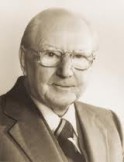
Burton Coffman lived to be a 101. At his 100th birthday celebration, he was reported to be 'still his normal, booming self,' and, though a chair was put on the podium for him to preach from, he insisted on standing...
Friday, September 28, 2012
Culture-making
Culture making is needed in every company, every school and every church. In every place there are impossibilities that leave even the powerful feeling constrained and drained, and that rob the powerless of the ability to imagine something different and better. At root, every human cultural enterprise is haunted by the ultimate impossibility, death, which threatens to slam shut the door of human hope. But God is at work precisely in these places where the impossible seems absolute. Our calling is to join him in what he is already doing -- to make visible what, in exodus and resurrection, he has already done.
Praise
From the additional notes to Charles Spurgeon's The Treasury of David, Psalm 103.
Verse 22. Bless the LORD, O my soul. That is to say, "Let thy vocation be that of the seraphim, O my soul, and enter on the life of heaven!"
Why should I praise him? Can my praise be of any advantage to him? No; nor that of all the heavenly hosts. It is infinite condescension in him to bearken unto the praises of his most exalted creatures. Let me bless the Lord, because no function will be more rich in blessings to my soul than this. The admiring contemplation of his excellence is in reality the appropriation thereof: the heart cannot delight in God, without becoming like God. Let me do it, because it is the peculiar privilege of man on this earth to bless the Lord. When he would find any to join him in this, he has to ascend the skies. [To join the angels in praise.] Let me do it, because the earth is fully furnished with the materials of praise. The sands, the seas, the flowers, the insects; animals, birds, fields, mountains, rivers, trees, clouds, sun, moon, stars,—all wait for me to translate their attribues and distinctions into praise.
But, above all, the new creation. Let me do it, because of him, through him, and to him, are all the things that pertain to my existence, health, comfort, knowledge, dignity, safety, progress, power, and usefulness. A thousand of his ministers in earth, sea, and sky, are concerned in the production and preparation of every mouthful that I eat. The breath that I am commanded and enabled to modulate in praise, neither comes nor goes without a most surprising exhibition of the condescension, kindness, wisdom, power, and presence of him whom I am to praise. Is it not dastardly to be receiving benefits, without even mentioning the name, or describing the goodness of the giver? Let candidates for heaven bless the Lord. There is no place there for such as have not learned this art. How shall I praise him? Not with fine words. No poetic talent is here necessary: Any language that expresses heart-felt admiration will be accepted. Praise him so far as you know him; and he will make known to you more of his glory. George Bowen, 1873.
Verse 22. Bless the LORD, O my soul. That is to say, "Let thy vocation be that of the seraphim, O my soul, and enter on the life of heaven!"
Why should I praise him? Can my praise be of any advantage to him? No; nor that of all the heavenly hosts. It is infinite condescension in him to bearken unto the praises of his most exalted creatures. Let me bless the Lord, because no function will be more rich in blessings to my soul than this. The admiring contemplation of his excellence is in reality the appropriation thereof: the heart cannot delight in God, without becoming like God. Let me do it, because it is the peculiar privilege of man on this earth to bless the Lord. When he would find any to join him in this, he has to ascend the skies. [To join the angels in praise.] Let me do it, because the earth is fully furnished with the materials of praise. The sands, the seas, the flowers, the insects; animals, birds, fields, mountains, rivers, trees, clouds, sun, moon, stars,—all wait for me to translate their attribues and distinctions into praise.
But, above all, the new creation. Let me do it, because of him, through him, and to him, are all the things that pertain to my existence, health, comfort, knowledge, dignity, safety, progress, power, and usefulness. A thousand of his ministers in earth, sea, and sky, are concerned in the production and preparation of every mouthful that I eat. The breath that I am commanded and enabled to modulate in praise, neither comes nor goes without a most surprising exhibition of the condescension, kindness, wisdom, power, and presence of him whom I am to praise. Is it not dastardly to be receiving benefits, without even mentioning the name, or describing the goodness of the giver? Let candidates for heaven bless the Lord. There is no place there for such as have not learned this art. How shall I praise him? Not with fine words. No poetic talent is here necessary: Any language that expresses heart-felt admiration will be accepted. Praise him so far as you know him; and he will make known to you more of his glory. George Bowen, 1873.
Wednesday, September 26, 2012
Listening
If I am a good listener, I don't interrupt the other or plan my own next speech while pretending to be listening. I try to hear what is said, but I listen just as hard for what is not said and for what is said between the lines. I am not in a hurry, for there is no pre-appointed destination for the conversation. There is no need to get there, for we are already here; and in this present I am able to be fully present to the one who speaks. The speaker is not an object of be categorized or manipulated, but a subject whose life situation is enough like my own that I can understand it in spite of the differences between us. If I am a good listener, what we have in common will be more important than what we have in conflict.
Aimless Travel
I have found aimless travel very helpful....long walks
in quiet places, trips by bus or on the train or by car. We do far too much planning in our lives as
it is. There can be real value in
creating open-ended activities and politely asking Jesus to join us as we walk
or drive or sit on public transport. Go
nowhere and take him with you.
...make a conscious effort to ask his perspective to inform and inspire you in all situations, including and especially the mundane ones. Visits to the supermarket, chores in the house, fishing trips, gardening, clubbing, evenings in the pub, meals out, hair appointments, anything and everything that you might do or get involved in. You never know what might happen.
Adrian Plass, in Blind Spots in the Bible, page 39
'Politely asking Jesus' is typical Plass.
...make a conscious effort to ask his perspective to inform and inspire you in all situations, including and especially the mundane ones. Visits to the supermarket, chores in the house, fishing trips, gardening, clubbing, evenings in the pub, meals out, hair appointments, anything and everything that you might do or get involved in. You never know what might happen.
Adrian Plass, in Blind Spots in the Bible, page 39
'Politely asking Jesus' is typical Plass.
Tuesday, September 25, 2012
Forgiven
Verse 3. All thine iniqities. In this lovely and well-known Psalm, we have great fulness of expression, in reference to the vital subject of redemption. Who forgiveth all thine iniquities. It is not "some" or "many of thine iniquities." This would never do. If so much as the very smallest iniquity, in thought, word, or act, were left unforgiven, we should be just as badly off, just as far from God, just as unfit for heaven, just as exposed to hell, as though the whole weight of our sins were yet upon us. Let the reader ponder this deeply. It does not say, "Who forgiveth thine iniquities previous to conversion." There is no such notion as this in Scripture. When God forgives, he forgives like himself. The source, the channel, the power, and the standard of forgiveness are all divine. When God cancels a man's sins, he does so according to the measure in which Christ bore those sins. Now, Christ not only bore some or many of the believer's sins, he bore them "all, "and, therefore, God forgives "all." God's forgiveness stretches to the length of Christ's atonement; and Christ's atonement stretches to the length of every one of the believer's sins, past, present, and future. "The blood of Jesus Christ his Son cleanseth us from all sin." 1Jo 1:9. "Things New and Old, "1858.
Quoted in The Treasury of David, by Charles Spurgeon. From the additional notes on Psalm 103.
Quoted in The Treasury of David, by Charles Spurgeon. From the additional notes on Psalm 103.
Slander

Quoted in Charles Spurgeon's The Treasury of David, additional comments on Psalm 31, verse 13.
Subscribe to:
Posts (Atom)